
Runners Brasil is a Brazilian magazine with an international reach, and we had the pleasure of exclusively chatting with Hilde Dosogne.
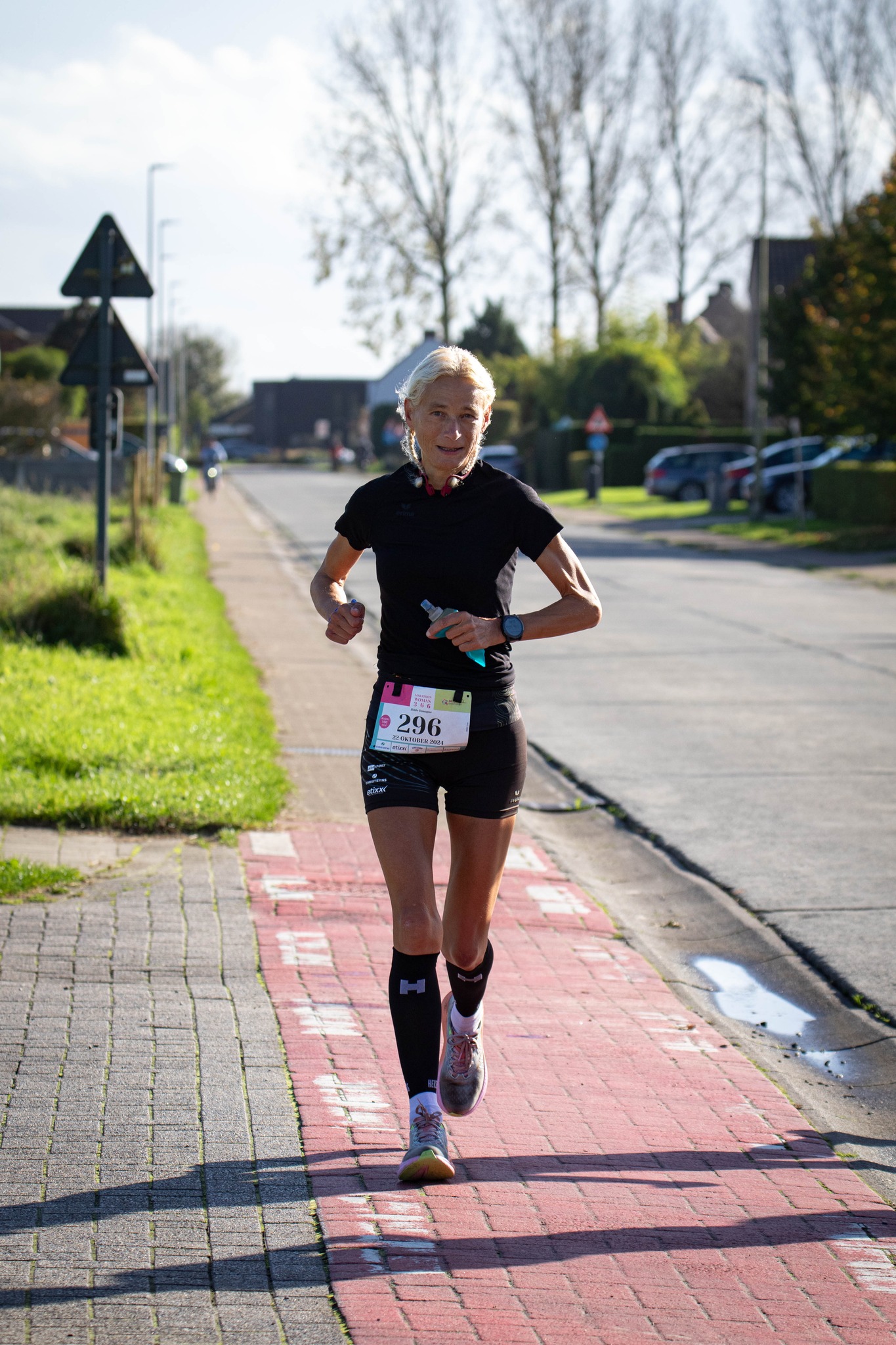
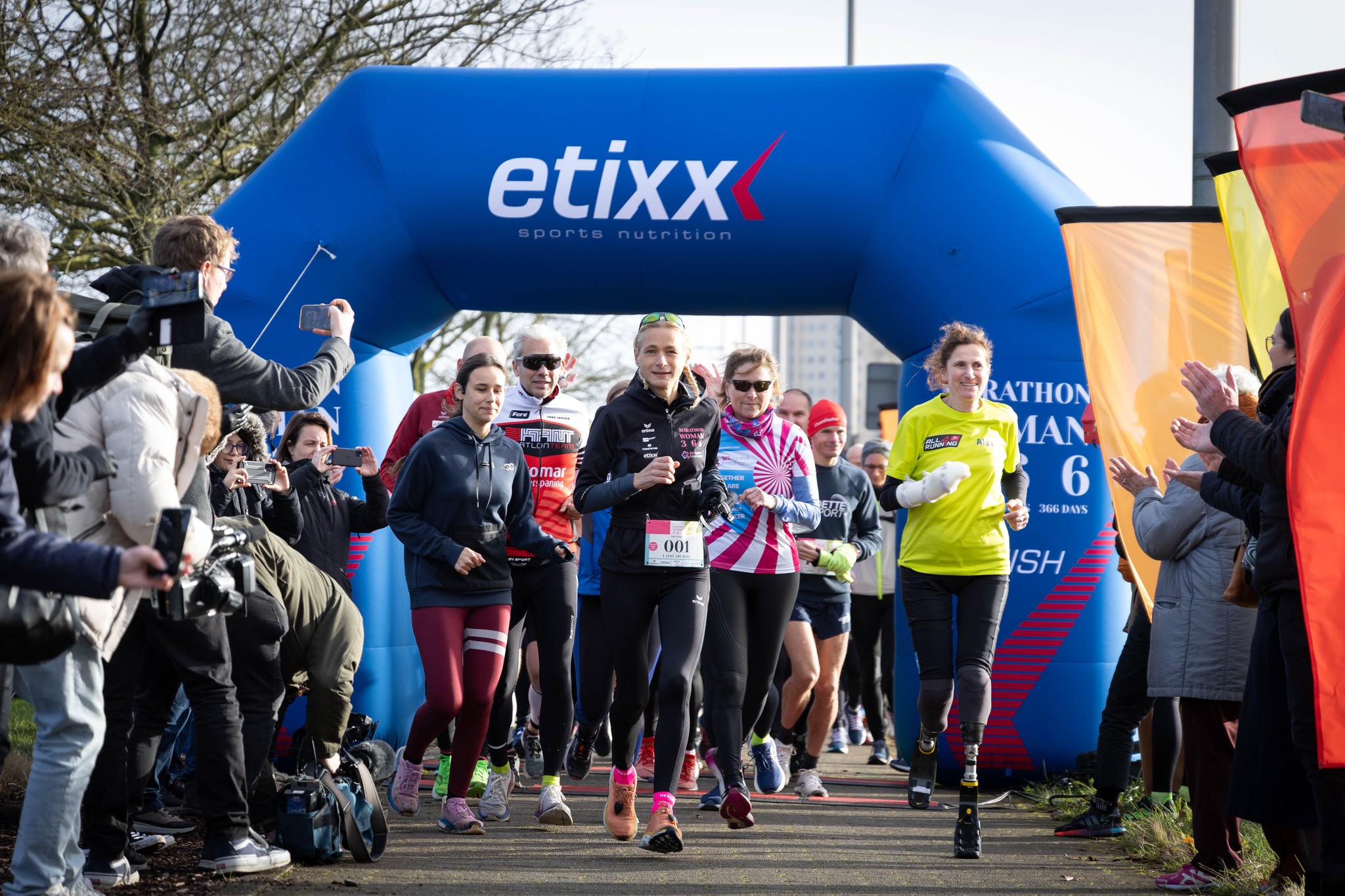
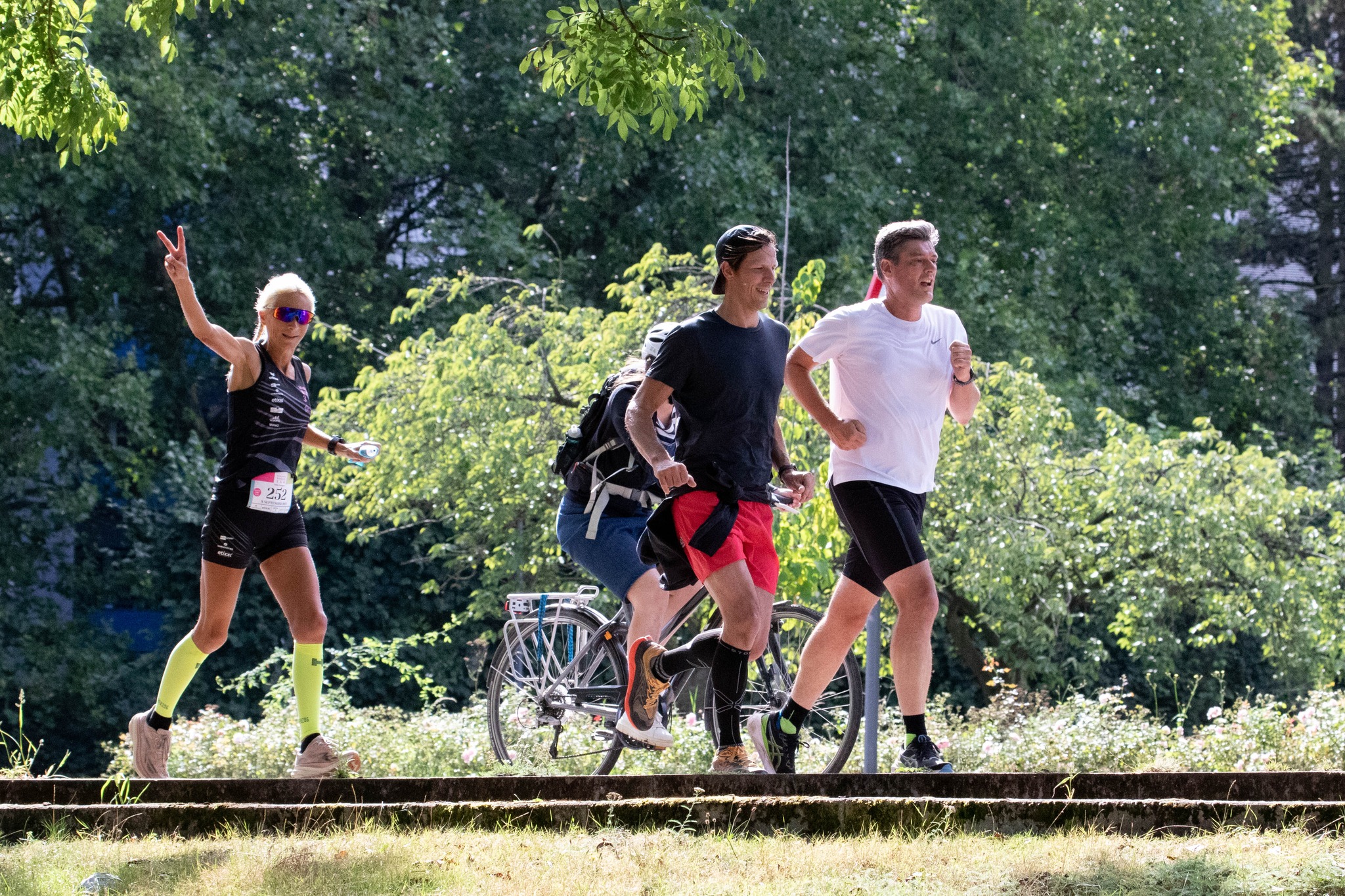
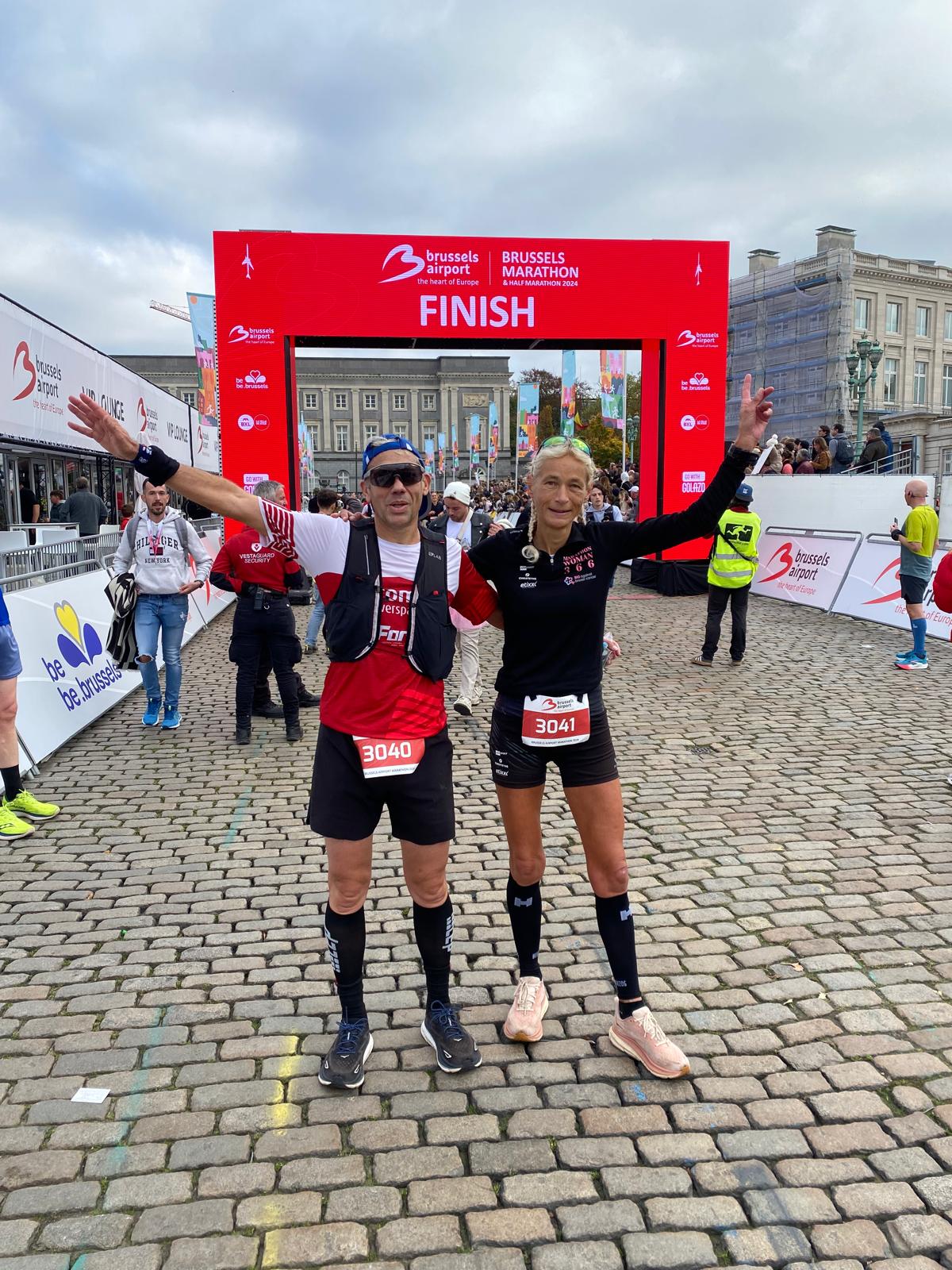
The Belgian athlete is the first woman to run a marathon a day for 366 consecutive days. In 2024, Hilde covered a total of 15.500 km, an unprecedented feat that secured her a place in the record books.
55 years old, 42 km, 366 days, and her name engraved in history!
Throughout 2024, she broke barriers, set records, pushed the limits of her body, and with mental strength, determination, and an unshakable purpose, she wrote her name in the Guinness Book and in the history of running globally. It was 366 days, 366 uninterrupted marathons. Hilde dedicated an entire year of her life to waking up and running a marathon every day, rain or shine.
“The mental part was the hardest, but I also had some physical issues. I had blisters, pain in my toes (my feet swelled, and I had to wear a larger shoe size), bursitis, some falls, a dislocated finger, pain in the soles of my feet, heels, and, last week, a hamstring injury. But nothing was serious enough to make me stop.” – Hilde Dosogne
Beginning and Motivation
RRB: Hilde, how and when did your passion for running, especially ultramarathons, begin?
Hilde Dosogne: It started in 2017 after my 2nd marathon. I wanted to run a marathon in less than 4 hours. I had to try many times, and only at the 10th attempt did I succeed! I started running more and more marathons per year. I had to bucket list races: 1) the Marathon des Sables, a multistage race in the desert in Morocco (after watching a documentary on it and 2) the Spartathlon race in Greece, a 246 km race in one go that you must complete within 36 hours. I started training for these races and along the way I ran several ultra distances. First, they were social runs like running the coastline of Belgium 75 km, then races like 6 hours, 100 km, 100 miles. I completed
RRB: What motivated you to take on the challenge of running a marathon a day for an entire year?
Hilde Dosogne: After finishing my bucket list races, I was thinking about what more I could do, something special. I was following Candice Burt on Instagram, an American runner who ran 200 consecutive ultraruns in 2022-2023. When she had stopped, I decided to run the daily consecutive marathons the year after. I considered breaking the ultramarathons record but that would take too much of my time and I wanted to keep working (part-time)
RRB: Have you always been an athlete, or did you discover your love for running later in life?
Hilde Dosogne: I have always loved running but only started to run more and do races later in life.
RRB: How does your family support you? Do you have children? How do you manage everything?
Hilde Dosogne: My family supports me very much. We have 4 children. My husband took over much of the household last year. He did the groceries shopping, cooked and taking care of the children. I still did the laundry and washed the dishes. It was difficult to combine everything, especially because I was still working. There wasn’t much spare time.
The 366 Marathons Challenge
RRB: What was the most challenging moment throughout this journey? Did you ever think about giving up? What kept you going?
Hilde Dosogne: The most challenging was the mental part, being at the start every day at a predefined hour. I needed witnesses for the official record according to Guinness World Records, so I always announced in advance where and when I was going to run. I had to be there no matter how bad I felt or how bad the weather was. I thought about giving up several times, especially when I was sick (I had corona in August), or when I had pain.
RRB: What is your daily routine like to face so many kilometers without rest? Tell us a bit about your process.
Hilde Dosogne: I got up at 6.15 am, ate breakfast, on weekdays went to work, from 12-1 pm I slept, I ran from 2-6 pm, went home, ate dinner and went to sleep at around 10 pm. In the weekend I was running in the morning from 8-12., then go home, eat lunch, rest in the afternoon, dinner at 6 pm and go to sleep at 10 pm.
RRB: What went through your mind when you broke the world record after 151 days and continued until the end of the year?
Hilde Dosogne: That was a good feeling of reaching the basic target. I was a bit overwhelmed by the media attention (mostly in Belgium and the Netherlands) but I also knew that there was still a long way to go.
RRB: How do you balance the physical and mental demands of such an extreme challenge?
Hilde Dosogne: The most difficult part was the mental part, but I also did have some physical problems. The physical issues were blisters, pain in my toes (because my feet had expanded, I had to wear bigger shoes), bursitis, several falls, a dislocated finger, pain in my foot soles, heels, and at the end an injury in my hamstring (the last week). But the physical problems were never serious enough to make me stop, and neither were the mental issues. Mentally it was a bit like a rollercoaster with a few ups (the events, races) but also many downs like weekdays when there were only a few people to join me for running.
RRB: What did this World Record mean to you? And how did it change your life?
Hilde Dosogne: It meant achieving the highest goal I have ever set for myself, it gave me much self-confidence and fulfilment. However, I still keep my feet on the ground. People recognize me on the street and in the shops and want to take selfies with me, especially in races. I have a lot of interviews and recordings of podcasts. In my work, my function has been changed because I was working part-time and now I’m working 4/5. Before 2024, I was working full-time.
RRB: Has it been officially recognized by the Guinness World Records?
Hilde Dosogne: Not yet, I’m still working on uploading all the data to the GWR server. It goes very slowly.
Preparation and Strategy
RRB: How did you prepare before embarking on this challenge?
Hilde Dosogne: I didn’t prepare for it specifically, I was already running a lot as a training for my ultraraces, at least 100 km per week. I was sometimes running consecutive marathons for 2 or 3 days and did a 7 x 20 km training in one weekend as training for the Spartathlon.
RRB: Did you follow a specific diet throughout the year to maintain your performance?
Hilde Dosogne: I tried to eat healthy in general, I also ate extra proteins and a lot of pasta. I needed 2 times as much calories than normal. In the morning I ate pancakes with extra protein powder and then the whole morning I was carbo loading at work (mostly waffles and cookies). After every marathon I drank a recovery shake. Sometimes I took a night protein shake too, before going to sleep.
RRB: How do you deal with muscle recovery, since there is no time to rest between races? And injuries?
Hilde Dosogne: I took a bath every evening to relax my muscles, and I stretched every time before the next marathon. Sometimes I used a foam roller, and I had weekly massages. I also used recovery cream on my legs and did core stability exercises with my physiotherapist. The time of rest was always enough, even between Friday afternoon and Saturday in the morning. I did need extra sleep, so I slept during my lunch break.
RRB: Is there any mental technique you use to stay focused during so many marathons?
Hilde Dosogne: Split it up in smaller parts, the first 10 km were warming up, then at 20 km you’re almost halfway and then the last 10 km are just counting down 10 – 9 – 8 …. I was running 5 km laps, did this 8 times and then an extra 2.5 km lap. They were just 8 laps not 42.5 km, it seems shorter. I also tried to distract myself by talking with people who ran along with me or listening to music or podcasts. I could also put it into perspective because I had already run the Spartathlon 2 times, and the marathons are much shorter. I was telling myself “This is just a marathon”. For the whole year I also tried to split it up, I have several milestones in-between such as the 1st month, day 60, day 100, day 151, day 200, 266 (only 100 to go), 300 and then ultimately 366. I tried to live in the day and not think too much about the next day.
Impact and Purpose
RRB: You raised a significant amount (if you can share the total) for breast cancer research. How did this cause inspire you throughout the journey?
Hilde Dosogne: I have raised 75,500 euros for Big Against Breast cancer. This cause helped me to persist because I knew I wasn’t only doing this for myself but also supporting the victims of breast cancer mentally and monetary. They have a much harder fight to battle, and they didn’t choose for it. In the hardest moments I thought about them. I had a youth friend who died from breast cancer, my neighbor died from it last year and I was also inspired by Joëlle This who currently fights against metastatic breast cancer.
RRB: What does it mean to you to run for something bigger than just a personal record?
Hilde Dosogne: It added an extra dimension to what I did. It felt like I was improving the world a little bit. It felt good and positive to help people with breast cancer.
RRB: How has the response been from people who followed your journey?
Hilde Dosogne: I get mostly (very) positive reactions from people who know me. They have a lot of respect for me, they look up to me. On social media sometimes I get negative reactions, but these people don’t know me. I don’t pay much attention to them.
Inspiration and Future
RRB: What advice would you give to someone who wants to start in the world of ultramarathons or marathons?
Hilde Dosogne: If you dream about something: believe in yourself and just go for it. But make sure that your goals are realistic. Build up to it gradually and be patient. Your hard work (training) will be rewarded.
RRB: Among the races you’ve participated in, such as Spartathlon and Ultrabalaton, which was the most challenging and why?
Hilde Dosogne: The Spartathlon was the most challenging because of the warm weather and the long distance (246 km). Ultrabalaton was easier, the distance was only 210 km and it was not that hot, only about 23°C and less elevation than the Spartathlon. I liked both races, but I like the Spartathlon the most, also because it’s more international (Ultrabalaton is about 95% Hungarians). The finish of the Spartathlon is the most magnificent finish that you can ever imagine, with all the people cheering, the flags and finally the statue of King Leonidas of whom the finishers kiss the feet.
RRB: Do you have any new challenges in mind for the future?
Hilde Dosogne: Yes, I would love to run the Spartathlon for the 3rd time.
RRB: What does running represent in your life today?
Hilde Dosogne: It’s still very important but this year I finally have my freedom back : I can go running where and when I want, not on pre-defined hours and places. I still enjoy it very much and I can’t wait to run another race this year.
RRB: Is there a dream marathon or ultramarathon you still want to run?
Hilde Dosogne: I’ve ran all my bucket list races but maybe the Badwater race in the US could be an option, or an ultra-trail race abroad.
Quick Questions
- What does running mean to you? Freedom and purpose.
- What does life mean to you? Enjoying the small things.
- An unforgettable race? The Spartathlon.
- A favorite food to recover energy? Chocolate.
- Who is Hilde Dosogne? A determined runner with a passion for making a difference.
- A moment of overcoming that you’ll never forget? 11 September 2024, the day I fell after running 27 km, got to the hospital with a dislocated finger, and restarted the marathon when I got home.
- A phrase that inspires you? Believe you can.
RRB: Have you ever been to Brazil? What message would you give to the runners and readers of Runners Brasil magazine who are inspired by you?
Hilde Dosogne: I haven’t been to Brazil. Believe in your dreams, believe in yourself, the mind can be stronger than the body. In difficult moments, believe that things can only get better, and they will.